
DUI Attorney in Southern Utah
Utah has the strictest DUI law in the United States — a 0.05% BAC limit and, as of January 1, 2026, the new "interdicted person" designation under HB 437 for extreme DUI convictions. If you've been arrested for DUI in St. George, Hurricane, or Cedar City, you need an attorney who understands both the criminal case AND the 10-day administrative license suspension deadline.
A DUI arrest in Utah triggers two separate legal proceedings simultaneously — a criminal prosecution AND an administrative driver license revocation. Both must be addressed quickly and strategically. The administrative case has a 10-day clock from the date of arrest, and missing that deadline means automatic license suspension regardless of what happens in the criminal case.
At Ruesch Reeve Werrett & Jones, PLLC, our Southern Utah DUI defense team handles both tracks. We represent clients across St. George, Hurricane, Cedar City, and surrounding communities throughout Washington, Iron, and Kane counties.
⏱️ 10-Day Deadline — Don't Miss It
The Utah Driver License Division will automatically suspend your license if you do not request an administrative hearing within 10 calendar days of your DUI arrest. This deadline is separate from your criminal court date and is strictly enforced.
Missing the 10-day window means giving up your right to challenge the suspension entirely — even if the criminal case is later dismissed or reduced. Call (435) 635-7737 immediately after a DUI arrest.
Utah's 0.05 BAC Limit — Lowest in the United States
Utah has the lowest DUI blood alcohol concentration (BAC) limit in the United States. Under Utah Code § 41-6a-502, the legal BAC threshold for most drivers is 0.05% — approximately 20% lower than the federal standard 0.08% used in most other states.
| Driver Category | Utah BAC Limit | Notes |
|---|---|---|
| General drivers (21+) | 0.05% | Lowest limit in U.S. — effective Dec 30, 2018 |
| Drivers under 21 | 0.00% | Zero tolerance — any measurable alcohol |
| Commercial drivers (CDL) | 0.04% | Federal commercial driver standard |
| Extreme DUI threshold | 0.16% | Triggers mandatory interdicted person designation (2026) |
Utah's 0.05 limit means many drivers who would be legal in other states are charged with DUI in Utah at the same level of consumption. For a 160-pound person, the limit can be reached after as few as 1-2 standard drinks depending on body composition, food intake, and other factors.
HB 437: Utah's 2026 Interdicted Person Amendments
The Interdicted Person Designation
Utah HB 437 (the Interdicted Person Amendments) introduced a major new consequence for DUI convictions. Courts may designate anyone convicted of DUI as an "interdicted person." Courts MUST designate anyone convicted of an "extreme DUI" as an interdicted person.
An interdicted person is legally prohibited from purchasing alcohol for the court-determined interdiction period. They must surrender their regular driver license or ID and obtain a special replacement with a visible "NO ALCOHOL SALE" notation across the photo.
The law also requires alcohol sellers (bars, restaurants, package stores) to check ID for every alcohol purchase, regardless of the customer's apparent age — Utah's so-called "100% ID Law."
What Counts as an "Extreme DUI"?
Under Utah law, an extreme DUI is defined as either:
- BAC of 0.16 or higher — more than triple Utah's 0.05 threshold
- BAC over 0.05 with illegal controlled substances present in the body
An extreme DUI conviction triggers the mandatory interdicted person designation under HB 437, plus longer license suspensions, larger fines, and other enhanced penalties beyond a standard DUI. Avoiding an extreme DUI conviction — through plea negotiations or trial — has become significantly more important since January 1, 2026.
Practical Effects of Interdicted Status
- Cannot purchase alcohol anywhere in Utah during the interdiction period
- Must surrender current license or ID to the court
- Must obtain replacement ID with prominent "NO ALCOHOL SALE" notation
- Status is visible to anyone who sees the ID — including employers, landlords, etc.
- After interdiction period expires, must apply for duplicate license — Utah will not automatically issue a clean license
Utah DUI Penalty Structure
Utah DUI penalties escalate substantially with each subsequent offense within a ten-year lookback period under Utah Code § 41-6a-503:
| Offense | Classification | Jail/Confinement | License Suspension | Base Fine |
|---|---|---|---|---|
| First DUI | Class B misdemeanor | 48 hours minimum | 120 days | ~$1,310 |
| Second DUI (within 10 years) | Class B misdemeanor (enhanced) | 10 days minimum | 2 years | ~$1,610 |
| Third DUI (within 10 years) | Third-degree felony | Up to 5 years prison | 2 years | Up to $5,000 |
| Felony DUI (other triggers) | Third-degree felony | Up to 5 years prison | 2 years | Up to $5,000 |
Additional consequences typically include:
- Ignition interlock device — required upon license reinstatement
- SR-22 insurance — high-risk insurance filing required
- Drug and alcohol assessment — and any required treatment
- Probation — typically 12-36 months
- Community service
- Court fees and surcharges — in addition to base fines
When Does a DUI Become a Felony in Utah?
Most DUIs in Utah are misdemeanors, but certain factors elevate a charge to a third-degree felony under § 41-6a-503:
- Third DUI within ten years — automatic felony elevation
- Prior felony DUI conviction — any prior felony DUI
- DUI causing bodily injury — to another person
- DUI causing death — vehicular homicide charges may also apply
- DUI with a minor under 16 in the vehicle — automatic felony elevation
Felony DUI consequences are far more severe than misdemeanor DUI — including potential state prison sentence, loss of civil rights, and lifelong felony record. A felony conviction also cannot be expunged in most cases.
Implied Consent and Chemical Test Refusal
Under Utah's implied consent law (Utah Code § 41-6a-520), every person who drives in Utah is deemed to have consented to chemical testing if lawfully arrested for DUI.
"A person operating a motor vehicle in this state is considered to have given the person's consent to a chemical test or tests of the person's breath, blood, urine, or oral fluids..."
Consequences of Refusing a Chemical Test
Refusing a chemical test carries serious consequences separate from the DUI case itself:
- 18-month license suspension — longer than the 120-day first-DUI suspension
- 36-month ignition interlock requirement upon license reinstatement
- Refusal can be used as evidence at the DUI trial
- Officer may obtain a search warrant for a blood draw despite the refusal
Refusing a test typically does NOT avoid the DUI charge — but it does trigger its own significant penalties. The decision to refuse is highly fact-specific.
Experienced Southern Utah DUI Defense
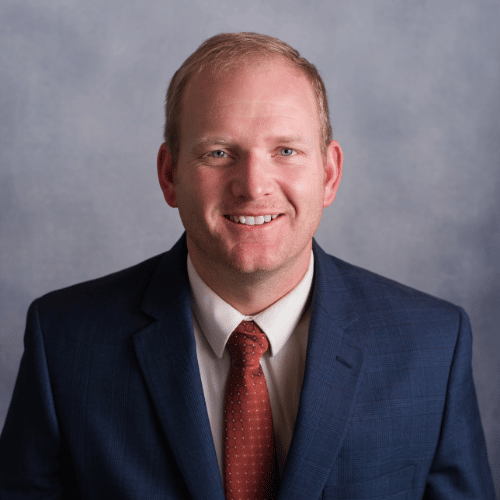
Our criminal defense team is led by founding partner Nathan C. Reeve, a longtime Hurricane native with extensive criminal defense experience including DUI, family law, and immigration matters. Anthony P. Werrett, named partner, brings over 22 years of legal experience — with 17+ years specifically in Southern Utah — including extensive criminal defense work.
Both attorneys are fluent in Spanish — particularly valuable for Spanish-speaking clients facing DUI charges who need clear communication about both the criminal proceedings and immigration consequences.
Your Southern Utah DUI Defense Team

Common Defenses to Utah DUI Charges
A skilled DUI defense involves examining every aspect of the arrest for procedural and constitutional issues. Common defenses include:
Constitutional Challenges
- No reasonable suspicion for the stop — Fourth Amendment violation if the officer lacked legal justification
- No probable cause for arrest — challenges the basis for the DUI arrest
- Improper Miranda warnings — statements made after arrest without warnings may be suppressed
- Improper search — blood draws or vehicle searches without proper warrants
Procedural Challenges
- Field sobriety test errors — improper administration or scoring
- Breath test machine reliability — calibration, maintenance, and certification issues
- Blood test chain of custody — gaps in evidence handling
- Officer training and certification — challenges to the officer's qualifications
Factual Challenges
- Medical conditions — diabetes, GERD, and other conditions can affect breath tests
- Recent food consumption — certain foods can produce false positives
- Mouth alcohol — recent mouthwash, breath sprays, or burping can skew results
- Rising BAC — alcohol absorbed after driving but before testing
- Improper observation period — the 15-20 minute observation before breath test
Sentencing Strategies
- Plea reduction — to a lesser offense like impaired driving
- Diversion programs — for eligible first offenders
- Treatment-focused sentencing — emphasizing rehabilitation
- Avoiding extreme DUI classification — especially critical post-HB 437
What to Do After a DUI Arrest in Utah
- Contact an attorney immediately — before making any statements about the case
- Request an administrative hearing within 10 days — to challenge the license suspension
- Do not discuss the case with anyone except your attorney — including family, friends, and especially social media
- Preserve all paperwork from the arrest — citation, court date notice, license revocation paperwork
- Document what you can remember about the events leading to the arrest while it's fresh
- Identify potential witnesses — who was with you before, during, and after the stop
- Note any health conditions or medications that may be relevant
- Show up for all court dates — failure to appear creates additional charges
- Consider voluntary treatment evaluation — can demonstrate good faith to the court
Beyond the Criminal Case: Collateral Consequences
A DUI conviction has consequences that extend well beyond the criminal sentence:
- Insurance rate increases — often 50-200% for years
- SR-22 filing requirement — high-risk insurance proof
- Employment background checks — many employers refuse to hire DUI convicts
- Professional license consequences — for healthcare workers, attorneys, teachers, commercial drivers
- Immigration consequences — DUI can affect visa applications, naturalization, and may trigger deportation for non-citizens
- Security clearance impact — for federal employees and contractors
- Driving record — DUI stays on driving record permanently in Utah
- Travel restrictions — Canada generally bars entry for those with DUI convictions
- Interdicted person status — visible on ID for the duration of interdiction (HB 437)
DUI Defense in Southern Utah: Specific Considerations
Southern Utah DUI cases have unique characteristics:
- I-15 corridor enforcement — heavy enforcement on the Las Vegas-to-Salt Lake route, especially weekends
- Tourism-driven cases — many DUIs involve travelers unfamiliar with Utah's 0.05 limit
- Zion National Park traffic — increased enforcement on Highway 9 during peak tourist season
- Mesquite/St. George cross-border — many cases involve drivers leaving Nevada casinos
- Local Utah Highway Patrol units — well-trained in DUI enforcement and breath testing
- Cedar City college population — Southern Utah University students often face under-21 DUI
- Higher BAC arrests common — visitors accustomed to 0.08 limits often well over 0.05
Serving DUI Clients Across Southern Utah
- Washington County — St. George, Hurricane, Washington City, Ivins, Santa Clara, La Verkin, Toquerville, Springdale
- Iron County — Cedar City, Enoch, Parowan, Paragonah, Brian Head
- Kane County — Kanab, Orderville, Big Water
Related Criminal Defense Cases We Handle
Utah DUI Defense FAQ
What is Utah's BAC limit for DUI?
Utah has the lowest DUI BAC limit in the United States at 0.05%, established by HB 155 in 2017 and effective December 30, 2018. The threshold is even lower for certain drivers:
- General drivers (21+): 0.05%
- Commercial drivers (CDL): 0.04%
- Drivers under 21: 0.00% (zero tolerance)
Utah's 0.05 limit is approximately 20% lower than the federal recommended threshold of 0.08% used in most other states. Many drivers who would not be charged with DUI in other states will be charged in Utah at the same level of consumption.
What is the 2026 "interdicted person" designation under HB 437?
Effective January 1, 2026, Utah HB 437 (the Interdicted Person Amendments) creates a new designation called "interdicted person."
Courts may designate anyone convicted of DUI as an interdicted person. Courts MUST designate anyone convicted of an "extreme DUI" (BAC of 0.16 or higher, or driving over 0.05 with illegal substances) as an interdicted person.
Interdicted persons:
- Are prohibited from purchasing alcohol for a court-determined period
- Must surrender their regular driver license or ID
- Must obtain a special replacement with "NO ALCOHOL SALE" displayed
The law also requires alcohol sellers to check ID for every purchase, regardless of apparent age.
What is an "extreme DUI" in Utah?
Under Utah law, an extreme DUI is defined as either:
- Driving with a BAC of 0.16 or higher — more than triple Utah's 0.05 threshold
- Driving with a BAC over 0.05 while also having illegal controlled substances present in the body
Extreme DUI convictions trigger the mandatory interdicted person designation under HB 437, plus longer license suspensions, larger fines, and other enhanced penalties beyond a standard DUI.
Since January 1, 2026, avoiding an extreme DUI conviction — through plea negotiations or trial — has become significantly more important.
What is the difference between a misdemeanor DUI and a felony DUI in Utah?
Most first and second DUI offenses in Utah are misdemeanors. A DUI elevates to a third-degree felony under Utah Code § 41-6a-503 in several situations:
- Third DUI conviction within ten years
- Any prior felony DUI conviction
- DUI causing bodily injury or death
- DUI with a minor under age 16 in the vehicle
Felony DUI carries up to 5 years in prison, fines up to $5,000, and a 2-year license suspension. Most felony DUI convictions cannot be expunged.
What are the penalties for a first DUI in Utah?
A first-offense DUI in Utah is generally a Class B misdemeanor under § 41-6a-503. Standard penalties may include:
- Minimum 48 hours in jail OR 48 hours of community service OR equivalent home confinement
- Base fine of approximately $1,310 plus court costs and surcharges
- 120-day driver license suspension
- Ignition interlock device requirement
- Mandatory drug and alcohol evaluation and any required treatment
- Probation
- Potential SR-22 insurance requirement
Penalties may be enhanced if the case involves an extreme DUI, a minor in the vehicle, or other aggravating factors.
What happens if I refuse a breath or blood test in Utah?
Under Utah's implied consent law (Utah Code § 41-6a-520), anyone driving in Utah is deemed to have consented to chemical testing if lawfully arrested for DUI.
Refusing a chemical test has serious consequences separate from the DUI case itself:
- 18-month driver license suspension (longer than the 120-day suspension for a first DUI)
- 36-month ignition interlock requirement upon license reinstatement
- Refusal can still be used as evidence at trial
- Officers may obtain a search warrant for a blood draw despite the refusal
Refusing a test typically does NOT avoid the DUI charge — but it may complicate the prosecution's case while triggering its own significant penalties.
How do I challenge a DUI license suspension in Utah?
Utah DUI arrests trigger two separate proceedings: the criminal case AND an administrative driver license revocation through the Driver License Division.
To challenge the administrative suspension, you must request a hearing within 10 calendar days of the arrest. This deadline is strict — missing it results in automatic license suspension regardless of what happens in the criminal case.
The administrative hearing is separate from the criminal court process and focuses on:
- Whether the officer had reasonable grounds for the stop
- Whether you were lawfully arrested
- Whether the chemical test was properly administered
Acting quickly to retain a DUI attorney is critical to preserve your right to challenge the suspension.
Can I get a Utah DUI expunged?
Some Utah DUI convictions may be eligible for expungement after a waiting period and meeting specific requirements under Utah Code § 77-40a:
- Misdemeanor DUI: typically 10 years from completion of all sentence requirements
- Felony DUI: generally NOT eligible for expungement
Other eligibility requirements include: no pending charges; payment of all fines and restitution; completion of all sentence terms; and no other disqualifying convictions.
The expungement process requires petitioning the court and is subject to court approval. An attorney can evaluate eligibility and handle the petition.
Talk to a Southern Utah DUI Defense Attorney
Tell us briefly about your DUI arrest. The 10-day license hearing deadline runs from the date of arrest. We respond within one business hour during office hours. All inquiries are protected by attorney-client privilege.
🔒 Your information is confidential and protected by attorney-client privilege.