
Car Accident Attorney in Southern Utah
If you were injured in a car accident in St. George, Hurricane, Cedar City, or anywhere across Southern Utah, you may be facing medical bills, lost income, and pressure from insurance companies. Utah's modified no-fault system, the four-year statute of limitations, and the 50% comparative fault bar all affect what you can recover — and how. Our car accident practice is led by Ben Ruesch, a Million Dollar Advocates Forum Life Member, a distinction held by fewer than 1% of U.S. attorneys.
Car accidents happen in an instant, but the consequences can last for months or years. At Ruesch Reeve Werrett & Jones, PLLC, our Southern Utah car accident attorneys help crash victims navigate the legal process while they focus on recovery. We represent clients across St. George, Hurricane, Cedar City, and surrounding communities throughout Washington, Iron, and Kane counties.
Utah car accident law involves three critical rules that determine what you can recover: the modified no-fault auto insurance system, the four-year statute of limitations, and the 50% comparative fault bar. Understanding these rules — and applying them strategically — is essential to maximizing your recovery.
An MDAF Life Member on Your Car Accident Case
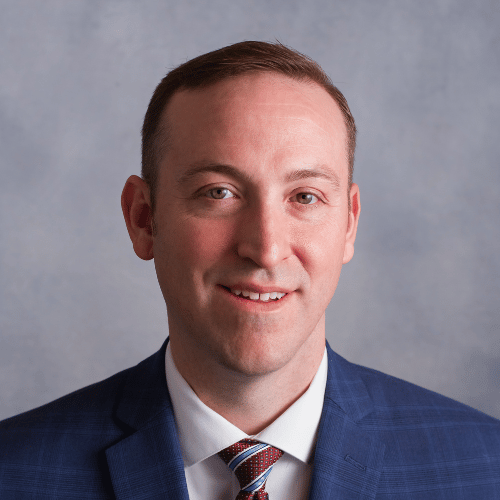
Ben Ruesch, Founding & Managing Partner, is a Million Dollar Advocates Forum Life Member — a distinction held by fewer than 1% of U.S. attorneys. Membership requires having achieved million-dollar (or multi-million-dollar) verdicts and settlements for clients.
Ben has led the firm's personal injury practice since founding the firm in 2009, bringing trial-ready experience to car accident claims throughout Southern Utah.
Why Hire a Southern Utah Car Accident Lawyer?
Insurance companies are focused on minimizing payouts, not protecting your best interests. Adjusters are trained negotiators with one primary goal: closing your claim for as little as possible. A knowledgeable car accident attorney levels the playing field by:
- Investigating how the accident occurred — reviewing police reports, witness statements, and crash scene evidence
- Identifying all liable parties — including drivers, employers (for commercial vehicles), government entities (for road defects), and product manufacturers (for vehicle defects)
- Calculating the full value of your damages — including future medical care, lost earning capacity, and non-economic damages
- Identifying all available insurance coverage — including the at-fault driver's liability, your own UM/UIM coverage, PIP, MedPay, and umbrella policies
- Communicating with insurance adjusters on your behalf — protecting you from saying anything that could damage your claim
- Preserving evidence and meeting deadlines — including the four-year statute of limitations under § 78B-2-307
Utah's Modified No-Fault System Explained
Utah is a modified no-fault state for auto accidents under Utah Code § 31A-22-307. This means every Utah driver must carry Personal Injury Protection (PIP) coverage that pays your initial medical expenses and lost wages regardless of who caused the accident.
Utah PIP Minimum Benefits
| PIP Benefit | Minimum Amount | Notes |
|---|---|---|
| Medical expenses | $3,000 | Paid regardless of fault |
| Lost wages | $1,250/month | Up to 1 year |
| Household services | $20/day | Up to 1 year |
| Death benefit | $3,000 | Per insured person |
| Funeral expenses | $1,500 | One-time |
The Utah Threshold Rule
Under Utah's no-fault system, you can only pursue non-economic damages (pain, suffering, emotional distress) from the at-fault driver if you meet the threshold:
- Medical expenses exceeding $3,000, OR
- Permanent disability based on objective medical findings, OR
- Permanent impairment based on objective medical findings, OR
- Dismemberment, OR
- Permanent disfigurement, OR
- Death
For economic damages exceeding PIP limits — lost wages beyond PIP, ongoing medical care, future medical needs — you can pursue the at-fault driver's liability coverage regardless of meeting the threshold.
Utah's Minimum Auto Insurance Requirements
Utah law requires every registered vehicle to carry minimum insurance coverage:
| Coverage Type | Minimum Amount | What It Covers |
|---|---|---|
| Bodily Injury Liability | $25,000 / $65,000 | Per person / per accident |
| Property Damage Liability | $15,000 | Per accident |
| Personal Injury Protection (PIP) | $3,000 | Your own medical expenses, no-fault |
| Uninsured Motorist (UM) | $25,000 / $65,000 | Required unless rejected in writing |
| Underinsured Motorist (UIM) | $25,000 / $65,000 | Required unless rejected in writing |
These are minimums — many drivers carry higher limits, and serious injuries often exceed minimum policy limits. When that happens, multiple coverage sources may need to be tapped to fully compensate the injured party.
How Fault Is Determined: Utah's Modified Comparative Fault Rule
Utah follows a modified comparative fault rule under Utah Code § 78B-5-818:
- If you are less than 50% at fault, you can recover damages — reduced by your percentage of fault
- If you are 50% or more at fault, you cannot recover any damages
Example: You are rear-ended at a red light. Damages are $80,000. The jury finds the other driver 90% at fault and you 10% at fault. Your recovery is $80,000 × 0.9 = $72,000.
Utah also abolished joint and several liability under § 78B-5-820 — meaning no defendant is liable for more than their proportional share of the harm.
Common Causes of Car Accidents in Southern Utah
Car accidents in Southern Utah are often caused by negligent or reckless driving:
- Distracted driving — texting, phone use, in-car entertainment
- Speeding and aggressive driving — especially common on I-15 between St. George and Cedar City
- Failure to yield or obey traffic signals — particularly at the growing intersections in Washington City and Hurricane
- Driving under the influence of alcohol or drugs — Utah's 0.05% BAC limit is the strictest in the nation
- Unsafe lane changes and tailgating
- Fatigued or drowsy driving — especially common with tourist traffic and long-haul commuters
- Out-of-state drivers — Southern Utah sees heavy tourist traffic; unfamiliar drivers contribute to crashes
Identifying the cause of the crash is critical to proving liability and pursuing compensation. Official crash data is published by the Utah Department of Transportation (UDOT) and the Utah Highway Safety Office.
Common Car Accident Injuries
Motor vehicle collisions can result in a wide range of injuries:
- Whiplash and soft tissue injuries — extremely common in rear-end collisions
- Broken bones and fractures
- Back and neck injuries — including herniated discs
- Traumatic brain injuries (TBI) — even when no skull fracture occurs
- Spinal cord injuries — can be catastrophic and life-altering
- Internal injuries — often delayed in presentation
- Burn injuries — especially in serious collisions involving fire
- Emotional trauma and PTSD — frequently underreported in early claims
For severe cases, see our catastrophic injury page.
Compensation Available After a Utah Car Accident
Economic Damages
- Past and future medical expenses — hospital, surgical, rehabilitation, prescription, equipment
- Lost wages and reduced earning capacity — both current and future
- Property damage — vehicle repair or replacement, personal items
- Out-of-pocket expenses — transportation to medical appointments, home modifications
Non-Economic Damages
If you meet the Utah threshold rule:
- Pain and suffering
- Mental anguish and emotional distress
- Loss of enjoyment of life
- Loss of consortium
- Disfigurement and scarring
Wrongful Death Damages
If a loved one died in the accident, surviving family members may recover damages under Utah Code § 78B-3-106. Wrongful death claims have a shorter two-year deadline.
What to Do After a Car Accident in Southern Utah
The steps you take in the hours and days after a crash can significantly affect your case:
- Get medical attention immediately — even for injuries that seem minor. Some serious injuries (concussions, internal bleeding, soft tissue damage) take days to manifest.
- Call 911 and report the accident — under § 41-6a-401, drivers must report any accident causing injury, death, or property damage of $2,500 or more.
- Document the scene if it is safe to do so — photos of the vehicles, road, license plates, and surrounding area.
- Get contact information for witnesses — names, phone numbers, addresses.
- Exchange information with other drivers — name, contact, insurance, license plate, vehicle make/model.
- Avoid discussing fault — do not admit fault, and do not give recorded statements to the at-fault driver's insurance company without an attorney.
- Preserve evidence — keep medical records, prescriptions, photos, and a journal of how the injury affects your daily life.
- Speak with a car accident attorney before accepting any settlement — early offers rarely reflect the true value of your claim.
Southern Utah-Specific Considerations
Car accidents in Southern Utah have unique characteristics that affect cases:
- I-15 corridor accidents — The interstate between St. George and Cedar City carries high-volume traffic with frequent out-of-state drivers traveling between Salt Lake City and Las Vegas. Cases involving out-of-state drivers add complexity around insurance coverage and jurisdiction that benefits from experienced counsel.
- Tourist traffic — Zion National Park, Bryce Canyon, and other regional attractions bring unfamiliar drivers to local roads. Tourist drivers are often unfamiliar with local hazards.
- Growing intersections in Washington City and Hurricane — Rapid population growth has outpaced infrastructure in some areas, creating high-crash intersections.
- Weather considerations — Flash flood country with sudden rain runoff; occasional snow at higher elevations near Cedar City and Brian Head.
- Rural roads with high speeds — Highway 9 to Springdale, Highway 14 to Cedar Breaks, and other scenic routes combine elevation changes with high speeds.
Your Southern Utah Car Accident Attorney
Serving Car Accident Victims Across Southern Utah
Our Hurricane office serves car accident clients throughout the region:
- Washington County — St. George, Hurricane, Washington City, Ivins, Santa Clara, La Verkin, Toquerville, Springdale
- Iron County — Cedar City, Enoch, Parowan, Paragonah, Brian Head
- Kane County — Kanab, Orderville, Big Water
Related Personal Injury Cases We Handle
Utah Car Accident FAQ
How long do I have to file a car accident claim in Utah?
In most car accident cases, Utah's statute of limitations gives you four years from the date of the crash to file a personal injury lawsuit under Utah Code § 78B-2-307.
Shorter deadlines apply in specific situations:
- Wrongful death: 2 years from date of death (§ 78B-3-105)
- Government vehicle/employee: 1-year notice of claim required (§ 63G-7-402)
Missing these deadlines almost always means losing your right to recover.
Is Utah a no-fault state for car accidents?
Yes. Utah operates a modified no-fault auto insurance system under Utah Code § 31A-22-307. All Utah drivers must carry Personal Injury Protection (PIP) coverage with minimum benefits of $3,000 medical, $1,250/month lost wages (up to 1 year), $20/day household services (up to 1 year), $3,000 death benefit, and $1,500 funeral expenses.
PIP pays regardless of who caused the accident. To sue the at-fault driver for non-economic damages (pain and suffering), you must meet Utah's threshold.
What is Utah's threshold for suing for pain and suffering after a car accident?
Under Utah's no-fault system, you can only pursue non-economic damages from the at-fault driver if you meet one of these threshold conditions:
- Medical expenses exceeding $3,000
- Permanent disability based on objective medical findings
- Permanent impairment based on objective medical findings
- Dismemberment
- Permanent disfigurement
- Death
For economic damages (lost wages, ongoing medical care, future needs) exceeding PIP coverage limits, you can pursue the at-fault driver's liability coverage regardless of meeting the threshold.
What are Utah's minimum auto insurance requirements?
Utah law requires every registered vehicle to carry minimum liability coverage of:
- $25,000 per person / $65,000 per accident for bodily injury
- $15,000 for property damage
- $3,000 in Personal Injury Protection (PIP)
- Uninsured/Underinsured Motorist coverage at the same liability minimums (unless rejected in writing)
These are minimums — many drivers carry higher limits. Serious injuries often exceed minimum policy limits, in which case multiple coverage sources may need to be tapped.
What if the other driver was uninsured or underinsured?
You may still have options through your own insurance coverage. Utah law requires uninsured motorist (UM) and underinsured motorist (UIM) coverage with your own auto policy unless you specifically reject it in writing.
These coverages step in when the at-fault driver has no insurance or insufficient insurance to cover your damages. You may also be able to pursue claims against multiple insurance policies depending on circumstances — an attorney can identify all available coverage sources.
How is fault determined in Utah car accidents?
Utah follows a modified comparative fault rule under Utah Code § 78B-5-818:
- If you are less than 50% at fault, you can recover damages reduced by your percentage of fault
- If you are 50% or more at fault, you cannot recover any damages
Fault is determined through investigation of police reports, witness statements, physical evidence, accident reconstruction, and traffic law violations. Utah also abolished joint and several liability under § 78B-5-820 — each defendant pays only their proportional share.
Should I accept the insurance company's first settlement offer?
Generally, no. Initial settlement offers often do not reflect the full value of a claim. Insurance companies typically make early offers to limit their exposure before the full extent of injuries and damages becomes clear.
Once you accept and sign a release, you cannot seek additional compensation later — even if your condition worsens. Speaking with an attorney before accepting any offer helps you understand whether it reflects the true value of your claim, including future medical care, lost earning capacity, and non-economic damages.
Do I need to file a police report after a car accident in Utah?
Yes. Under Utah Code § 41-6a-401, drivers involved in any accident resulting in injury, death, or property damage of $2,500 or more must remain at the scene, exchange information, and ensure law enforcement is notified.
The investigating officer typically prepares a Utah traffic crash report (Form UT-10), which becomes critical evidence in any insurance or injury claim. If officers are not dispatched, you may file a written report directly with UDOT. Failing to comply with these duties is itself a separate offense.
Talk to a Southern Utah Car Accident Attorney
Tell us briefly about your accident. We respond within one business hour during office hours. All inquiries are protected by attorney-client privilege.
🔒 Your information is confidential and protected by attorney-client privilege.