
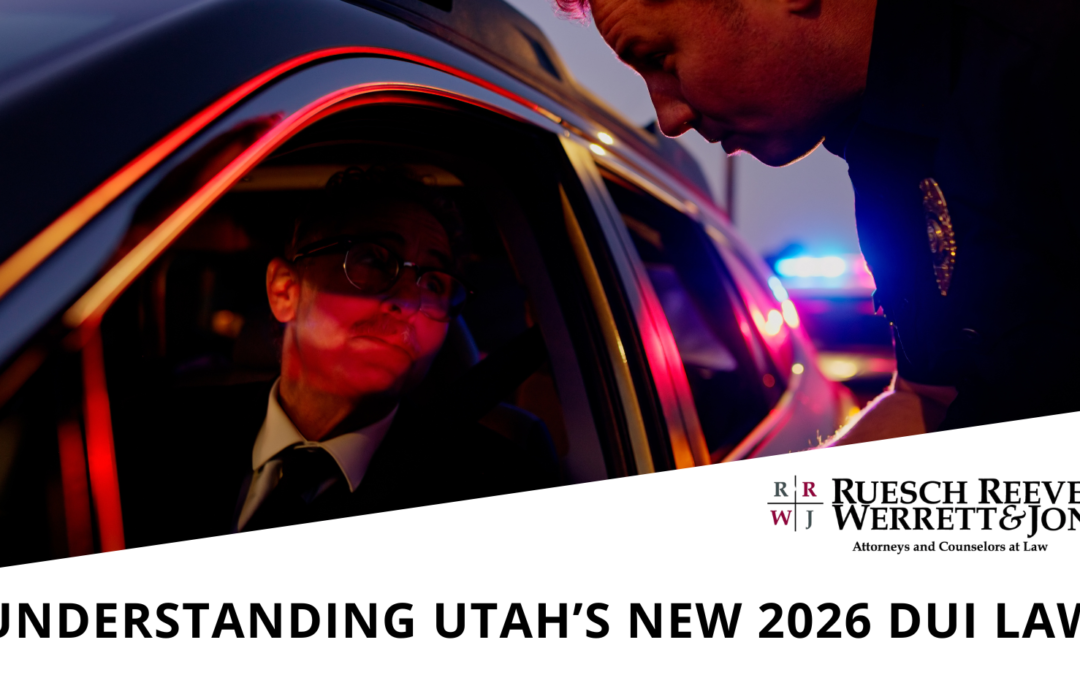
Utah maintains some of the nation’s strictest DUI laws. In fact, it pioneered the country’s lowest standard BAC limit at 0.05%. Now, House Bill 437 changes the game completely. This new law drastically raises the stakes for anyone facing a Utah DUI arrest.
If police recently arrested you or a loved one for a DUI in Utah, you must understand how this new law impacts your case, your driving privileges, and your daily life.
What is HB 437?
Passed in response to tragic repeat drunk driving incidents, HB 437 shifted Utah’s legal focus from purely retrospective punishments (like fines and jail time) toward active, visible prevention.
The core mechanism of this law is the creation of a strict restriction system tied directly to an offender’s identification. Under HB 437, courts have the authority to legally classify individuals convicted of serious DUI offenses as “interdicted persons.”
The Mandatory Threshold: What Constitutes an “Extreme DUI”?
While a BAC of 0.05% triggers a standard DUI in Utah, the new law forces an automatic, mandatory “interdicted person” status on anyone the state convicts of an Extreme DUI.
Under Utah law, an Extreme DUI is defined as:
- Driving with a blood alcohol concentration (BAC) of 0.16% or higher (exactly double the standard federal limit of 0.08%).
- Driving with a BAC of 0.05% or higher while also having any measurable, unprescribed controlled substance in your system.
If you meet either criteria, the court loses all judicial discretion: the judge must automatically brand you an interdicted person.
The Consequences: The “NO ALCOHOL SALE” Marked License
The practical implications of being labeled an interdicted person are immediate and highly visible.
- Surrender of ID: Upon designation, you must surrender your regular driver’s license or state identification card to the court.
- The Red Banner: You must apply for a new, specialized card through the Utah Driver License Division (DLD). This new card features a prominent, bright red banner across the top that explicitly states: “NO ALCOHOL SALE.”
- Statewide Ban: It is legally fraudulent for an interdicted person to purchase alcohol anywhere in the state. Because Utah enforces strict scanning and ID-checking requirements at grocery stores, bars, and restaurants, this banner acts as an immediate barrier.
- Enhanced Law Enforcement Scrutiny: If an officer pulls you over for a routine traffic stop, handing them an ID with a bright red “NO ALCOHOL SALE” banner instantly signals your serious DUI history.
Can You Still Go to Restaurants and Bars?
Yes. The law prevents the sale and service of alcohol to you, not your physical presence in an establishment. Interdicted individuals can still go out to eat with family or attend social events at venues that serve alcohol. However, servers and establishments face severe liability if they serve alcohol to someone holding a marked ID.
Long-Term Penalties for Extreme DUI
The “No Alcohol Sale” restriction layers on top of Utah’s already stringent criminal penalties. An Extreme DUI conviction carries heavy mandatory minimums that a judge cannot waive:
- Mandatory Jail Time: A minimum of 5 days in jail, or a combination of 2 days in jail and 30 days of home confinement.
- Ignition Interlock Device (IID): Mandatory installation of an interlock device on your vehicle at your own expense.
- Hefty Fines & Treatment: Minimum fines starting at $700 (often scaling much higher with court fees), alongside mandatory alcohol screening, assessments, and substance abuse education.
Aggravating Circumstances and Standard DUIs
Even if your BAC was below 0.16%, you aren’t entirely out of the woods regarding the interdicted status. For standard DUIs, judges look closely at aggravating factors—such as whether the arrest involved an accident, property damage, or injuries to others. In standard DUI cases, the judge retains the discretionary power to implement the interdicted status if they feel the circumstances warrant it.
How a Strong Defense Can Help
Because the line between a standard DUI and a mandatory Extreme DUI designation is explicitly tied to numerical data (0.16% BAC), the accuracy of the evidence is everything.
Breathalyzers and blood tests are not infallible. An experienced criminal defense attorney will meticulously review the evidence of your traffic stop to find critical vulnerabilities, such as:
- Improperly calibrated breath testing machines.
- Chain-of-custody errors with blood samples.
- Medical conditions that may distort test results.
- Flawed administration of Field Sobriety Tests (FSTs).
If your test result was hovering near the 0.16% threshold, proving even a minor margin of error can mean the difference between a discretionary standard charge and a life-altering mandatory marked license.
Time is of the Essence: The 10-Day Rule
Remember, a DUI arrest triggers two parallel battles: the criminal case in court and the administrative case with the Utah Driver License Division (DLD). You have only 10 calendar days from the date of your arrest to request an administrative hearing to fight your license suspension. Missing this brief window means your driving privileges will be automatically suspended, regardless of what happens later in your criminal court hearings.
Contact Ruesch Reeve Werrett & Jones, PLLC. Today
The legal landscape in Utah is more consequential than ever before. Do not navigate these complex, high-stakes changes alone. If you have been arrested for a DUI in Utah, protect your future, your reputation, and your daily freedom.